
Adjustable Gastric Band
(Lap-Band)
The most reversible bariatric procedure — a silicone band placed around the stomach to limit food intake. An important option for patients who have had a band placed and need ongoing support or conversion care.
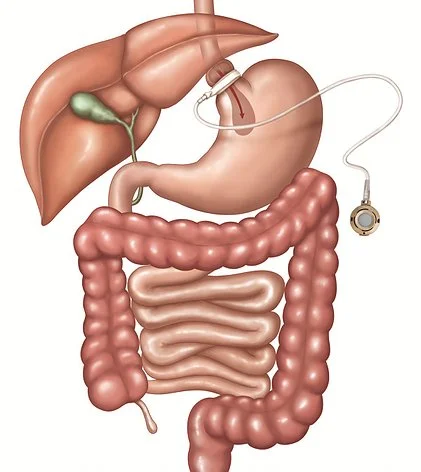
What the Adjustable Gastric Band Does
The adjustable gastric band is a silicone ring placed around the upper part of the stomach, creating a small pouch above the band. This limits how much food can be eaten at once and slows the passage of food — producing feelings of fullness with smaller meals.
The band is connected to a small port placed just beneath the skin. Fluid can be added or removed through this port with a simple needle injection — adjusting the tightness of the band to optimize weight loss. This makes it the only bariatric procedure that can be continuously tuned without additional surgery.
Patients typically visit their surgeon monthly in the first year for band adjustments ("fills") to fine-tune their restriction and achieve the best weight loss results.
Safest procedure in the first 30 days
No stomach cutting or intestinal rerouting — the band carries the lowest short-term surgical risk of any bariatric procedure.
Outpatient — go home same day
No overnight hospital stay required. Most patients return to normal activities within a few days with minimal discomfort.
Adjustable — tuned to your progress
The band can be tightened for more restriction or loosened if needed (illness, pregnancy). This flexibility is unique among bariatric procedures.
What You Need to Know About the Gastric Band Today
The landscape for gastric banding has changed significantly over the past decade. Here is an honest, up-to-date picture.
Band usage has declined dramatically
Once 50% of all bariatric procedures, the adjustable gastric band now accounts for only ~3% of surgeries in the United States. This reflects growing evidence of long-term complications and weight regain compared to sleeve and bypass procedures.
Highest long-term complication rate
While the band has the lowest short-term risk, it carries the highest long-term complication rate of any bariatric procedure — including band slippage, erosion, port problems, and the need for revision surgery.
Fear of needles? This may not be for you
Band adjustments require a needle injection through the skin into the port. If you have a significant fear of needles, this frequent requirement (monthly in year one) may make the band a poor fit.
Results are highly variable and patient-dependent
Weight loss with the band varies more than any other procedure. Success depends heavily on patient compliance, dietary habits, and consistent follow-up — more so than with sleeve or bypass.
We follow band patients from other surgeons
If you had a band placed elsewhere, our team is happy to provide follow-up care, adjustments, and long-term management — even if we didn't perform the original procedure.
Band not working? Conversion is an option
If the band hasn't delivered results or has caused complications, we offer revision surgery — converting the band to a sleeve, bypass, or SADI-S. Many patients see excellent results after conversion.
Our honest recommendation about the gastric band
We believe in giving every patient a complete and honest picture. Due to the band's declining effectiveness and higher long-term complication rate, our surgeons rarely recommend it as a first-line procedure. If you're considering bariatric surgery for the first time, the gastric sleeve, bypass, or SADI-S will almost certainly deliver better long-term results.
However, if you currently have a band that isn't working — whether placed by us or another surgeon — we strongly recommend being evaluated. Continuing to use a non-functional or problematic band increases the risk of serious long-term complications. Learn about revision options →
Have a Gastric Band That Isn't Working?
Whether you need ongoing band management or are considering a revision to a more effective procedure, our board-certified bariatric surgeons are here to help — with no judgment and full transparency.